
What Makes One Plumbing Job Bigger Than Another
The things that decide how much work a plumbing job takes, from access and pipe age to parts and urgency.
Two calls can sound the same over the phone, “the kitchen sink is leaking,” and turn out to be very different jobs. One is a loose slip nut under the cabinet. The other is a corroded drain arm inside the wall that has been dripping into the floor for months. What changes is how much has to be opened, replaced and put back, and these factors decide that.
Factors That Change the Size of a Job
More columns to the right: swipe.
| Factor | How it affects the job | Example jobs |
|---|---|---|
| Access to the pipe or fixture | Pipe in an open basement is reached directly; pipe behind tile, above a finished ceiling or under a floor has to be opened up first | A shutoff under a vanity versus a valve behind a tiled shower wall |
| Pipe material and age | Old galvanized steel and cast iron can crack or seize when disturbed, so a small repair may grow; copper, PEX and PVC take new fittings cleanly | Adding a valve to galvanized supply; tying PVC into a cast-iron stack |
| Size and type of fixture or unit | A heavier fixture, a larger tank or a change of fuel or venting means more parts and more connections | A like-for-like electric water heater swap versus a switch to tankless |
| Number of fixtures involved | One fixture is one repair; several on the same line can point to a shared cause farther along | One dripping faucet versus low pressure at every faucet in the house |
| Condition of surrounding walls or floors | Soft subfloor, rotted framing or crumbling plaster has to be dealt with before new pipe or a fixture goes back | Resetting a toilet on a sound floor versus one whose flange sits on rotted subfloor |
| Code or permit needs | Replacing some equipment means bringing its connections up to current code, and some work has to be inspected | Relief valve discharge piping on a new water heater; venting on a gas unit |
| Parts availability | Common parts are easy to find at a supply house; parts for older fixtures may have to be ordered or adapted | A standard toilet fill valve versus a cartridge for a discontinued faucet |
| Urgency of the call | A problem stopped early is usually a smaller repair; an urgent call often means stopping the damage first and finishing the repair later | A slow drip under a sink versus a burst pipe that has soaked a ceiling |
When the Wall or Floor Has to Open
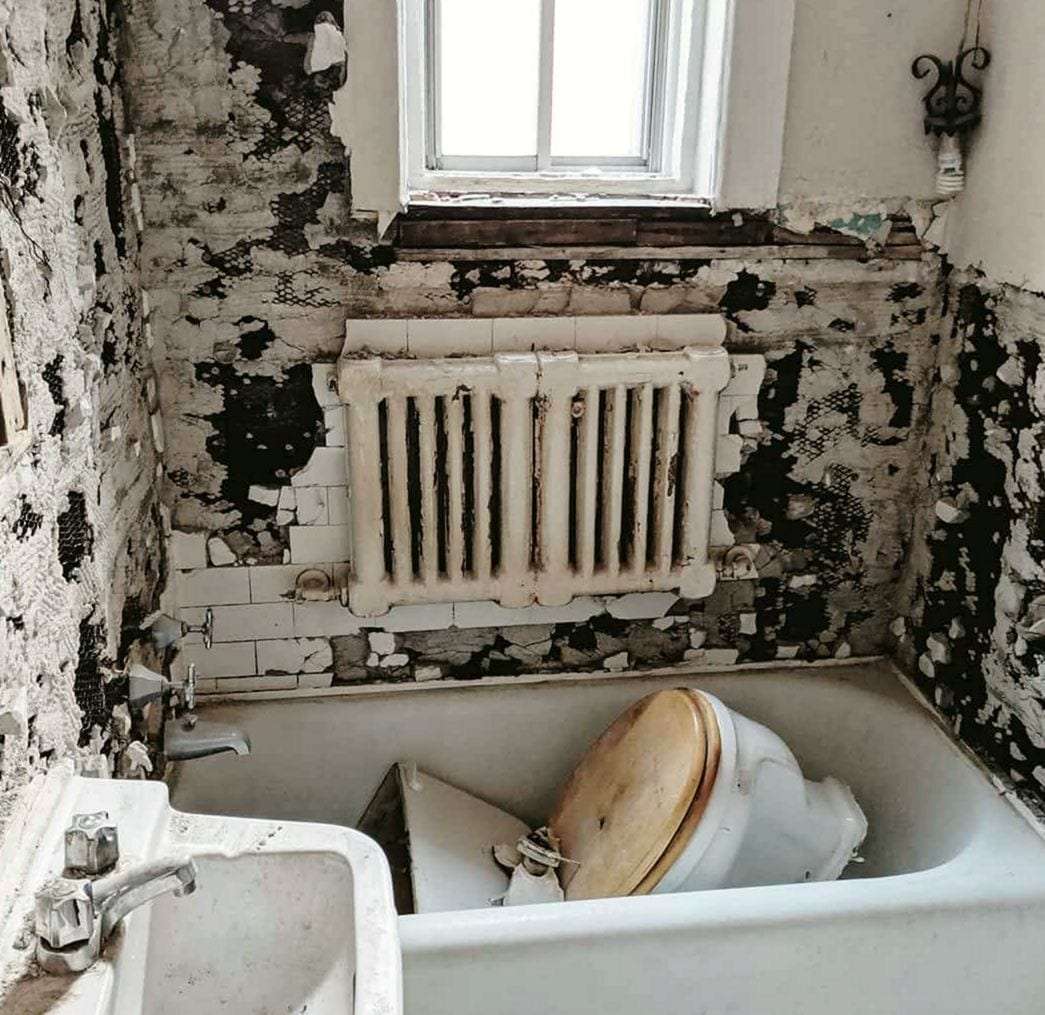
Walls and floors are where a job is hardest to judge from outside. Plaster, tile and old subfloor can hide a slow leak for years, and how far the damage reaches. Nixon is often called to older houses, where worn shutoff valves and corroded pipe tend to show up once a wall is opened. A ceiling stain might trace back to one loose fitting, or to a drain line that has wept long enough to soften the floor around a toilet. A plumber usually opens only as much as the repair needs, but when the pipe behind turns out worse than it looked, the opening grows, and the job with it.
How an Estimate Is Put Together
Nixon gives an estimate only after looking at the problem, and he explains what each line covers before starting. If something unexpected turns up once the work is under way, such as a second leak behind the first or a valve that crumbles when it is turned, he calls the customer before going further.
Details to Send With a Request
- What is wrong: what you see, hear or smell, and when it started.
- Where in the home: which floor, room and fixture, and whether the pipe runs through a basement, a crawl space or a finished ceiling.
- Age of the fixture: the date on a water heater’s rating plate, or roughly when the bathroom was remodeled.
- Photos of the problem and the pipes or valves around it, by email to nixon@rossville-plumbing.com.
Why Similar Jobs Can Differ
Why can two jobs that sound alike turn out so different?
The same symptom has different causes. A toilet leaking at the base may need only a new wax ring, or a new flange, or a new section of subfloor as well. A water heater replacement may be a straight swap, or it may need new venting, a raised stand in a garage or a change of fuel.
Why do some problems need an in-person look first?
Much of a plumbing system is out of sight. A slow drain may be one trap or the main line; low pressure may be one aerator full of scale or old galvanized pipe narrowing throughout the house. Photos help narrow it down, but the condition of valves, pipe and the structure around them only shows on site.
Does an older house always mean a bigger job?
Not always. Plenty of repairs in older houses are routine. Older pipe and valves are simply more likely to need replacing once they are disturbed, so it helps to expect that possibility from the start.
Send the details and a few photos, or call to talk it through.