
Plumbing Repairs in Hamilton
Faucets, toilets, supply lines, traps and valves: the everyday fixes that keep water where it belongs in a house.
Plumbing trouble in a house usually starts small: a faucet that drips with the handle off, a toilet that refills by itself, a damp patch on the cabinet floor under the kitchen sink. Behind each one there is usually a single worn part, such as a cartridge, a flapper or a washer, and replacing it is the whole job.
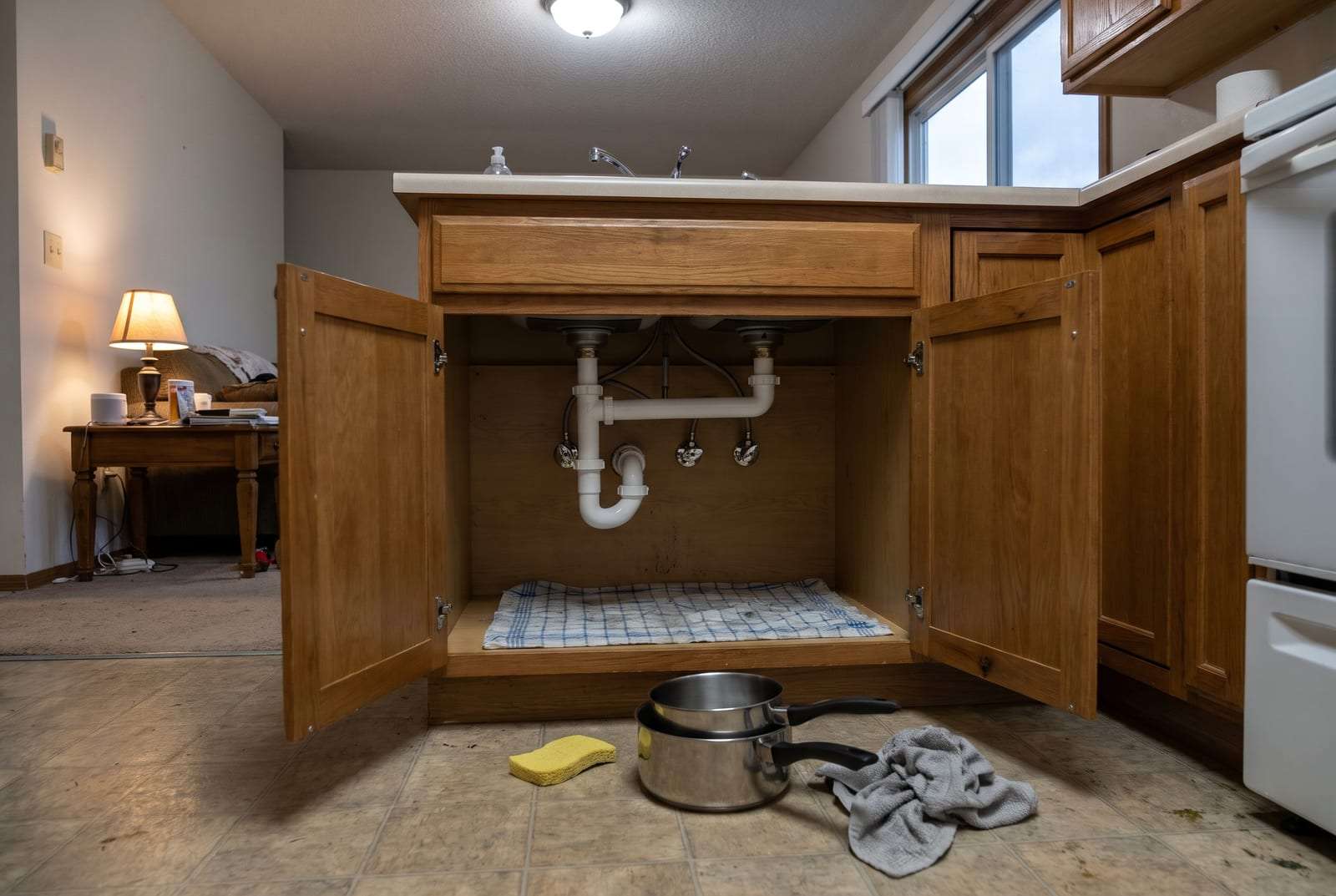
A repair is the right answer when the fixture is sound, the trouble comes from one part, and parts are still made. When the body is corroded, the fixture keeps failing in new places, or the pipe around it is too worn to hold a fitting, a new fixture makes more sense, and Installs & Replacements covers what that involves.
What Each Everyday Repair Involves
The signs below are the ones homeowners tend to notice first.
More columns to the right: swipe.
| Problem | Signs you will notice | What the repair usually involves |
|---|---|---|
| Dripping faucet | Drips with the handle off, a stiff handle, white crust at the spout | A new cartridge, washer or O-rings, and a cleaned valve seat |
| Running toilet | The tank refills on its own, a steady hiss, a trickle into the bowl | A new flapper or fill valve, with the float set to the right height |
| Leaking supply line | A wet cabinet floor, a bulge or a drip at the braided hose | Swapping the line, and often the angle stop it threads onto |
| Low water pressure | Weak flow at one faucet or at all of them | At one fixture, clearing the aerator or cartridge; house-wide, checking the main valve, the regulator and old galvanized pipe |
| Slow or clogged drain | Water standing in the basin, gurgling, a sour smell | Clearing the trap, then a hand snake down the branch line |
| Leaking under-sink trap | Drips at the slip nuts, a musty cabinet | New washers at the joints, or a PVC trap in place of corroded chrome |
| Noisy pipes | A bang when a valve shuts, chatter or humming in the walls | Strapping loose runs and adding water hammer arrestors |
| Failed shutoff valve | Will not turn, will not close all the way, or drips at the stem | Cutting out the old valve and fitting a quarter-turn ball valve |
| Leaking hose bib | A drip at the spout, damp drywall behind it after the first spring use | New packing and a washer, or a frost-free sillcock if a freeze split it |
Water spraying, or coming through a ceiling? Close the main shutoff first, then see Urgent Service.
Several drains slow at once, or water rising from a basement floor drain, points past the trap. That work is on Drains & Sewers.
Finding Where the Water Really Comes From
Water rarely shows up where it starts. A puddle under the sink may come from the supply line, the trap or the dishwasher hose; a ceiling stain under a bathroom can be the toilet’s wax ring or the tub drain. A plumber traces it one fixture at a time before taking anything apart. Drop cloths go down first, then the water is shut off and the failed part comes out.
A toilet that rocks is worth a look early. Once its wax seal fails, every flush wets the subfloor, and the flange under it is often cracked too.
Nixon did a great job for us. Our upstairs toilet was rocking and leaking at the base, and the floor around it was getting soft. He came out, pulled it, and showed us the wax ring was shot and the flange was cracked. Fixed the flange and reset the toilet the same day. Very neat and he cleaned up after. The floor feels solid again and we haven't seen a drop of water around the base since.
Worn Shutoffs and Galvanized Pipe in Hamilton’s Older Houses
Many houses in Rossville, German Village, Dayton Lane and the East End went up between the late 1800s and the 1950s, and some still carry galvanized steel supply pipe. It rusts from the inside, narrowing until a faucet that once ran hard only trickles, and its leaks tend to start at the threads.
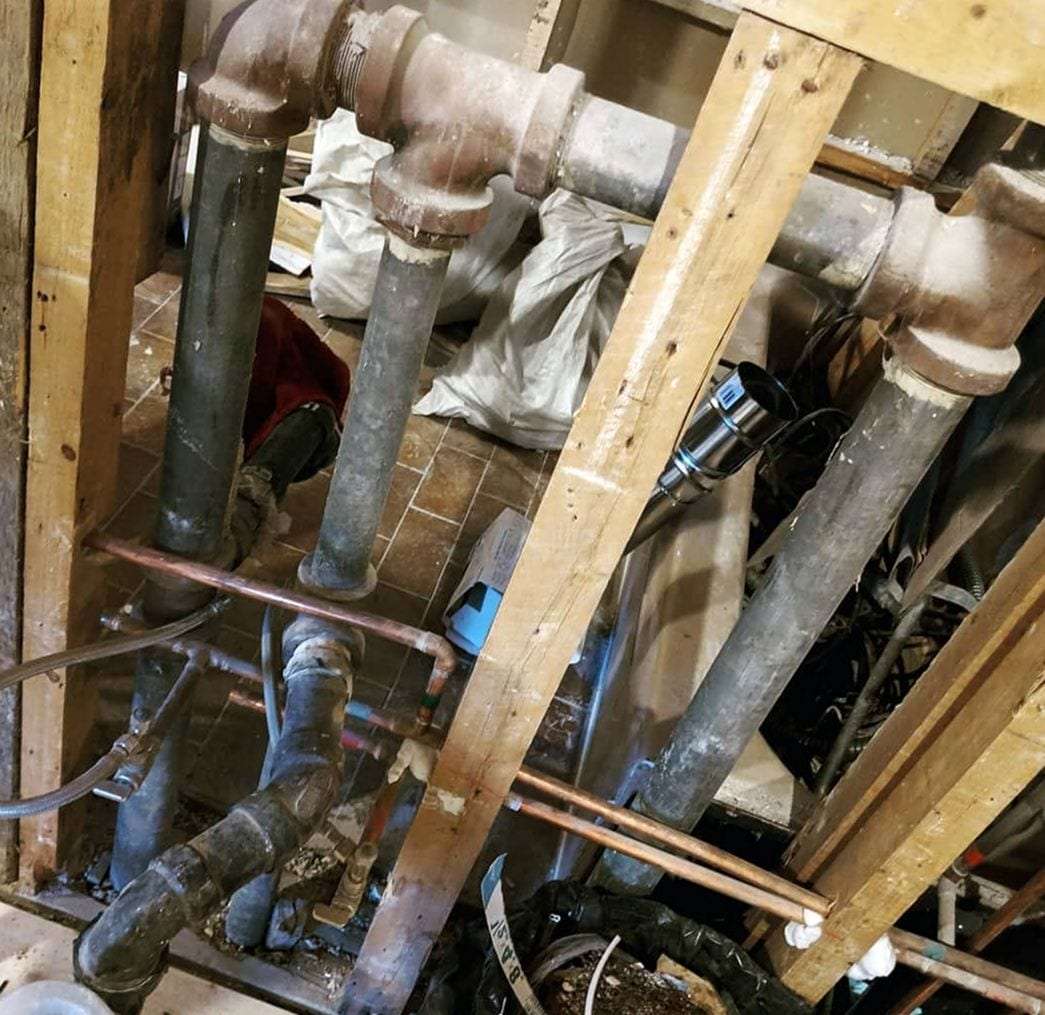
Old multi-turn shutoffs are the other weak spot: after decades left open, they may refuse to close or start leaking at the stem once turned. Nixon is often called to older houses where worn shutoffs and corroded pipe show up once a wall is opened. If something unexpected turns up, he calls the customer before going further.
Can a Small Leak Wait?
Some can wait a few days, but a slow leak does its damage out of sight.
Can a dripping faucet wait a few weeks?
It will not flood anything, but the drip keeps wearing the seat, and hard water leaves scale that makes the repair harder. Book it soon; there is no need to drop everything.
What about a slow drip under the sink?
Set a container under it and check the cabinet floor each day. Particleboard swells and molds within weeks, and a weeping supply line can let go all at once.
How can I tell if a leak is getting worse?
A stain that spreads, a soft floor around the toilet or a musty cabinet. With every faucet off, a moving leak indicator on the water meter means water is going somewhere.
When should a small leak not wait?
When it is near wiring or a light fixture, when a ceiling stain keeps growing, or when the shutoff will not stop it. Then see Urgent Service.
Something dripping, running or stuck at your place?