
Plumbing in Fairfield, Ohio
Fairfield sits just south of Hamilton, and most of its houses went up after the 1950s, which shapes the plumbing problems that come up there.
What Fairfield’s Suburban Houses Have in Common
Drive through most Fairfield neighborhoods and you see the same pattern: ranches, split-levels and two-story houses built from the 1960s through the 1990s, some on concrete slabs and some over full basements. Inside, the plumbing is usually the original copper water piping, plastic drain lines and the fixtures the builder chose because they could be bought by the dozen. None of that was poor work. It is simply reaching the age when parts wear out, and they tend to wear out in a predictable order.
Copper Supply Lines Reaching the Pinhole Stage
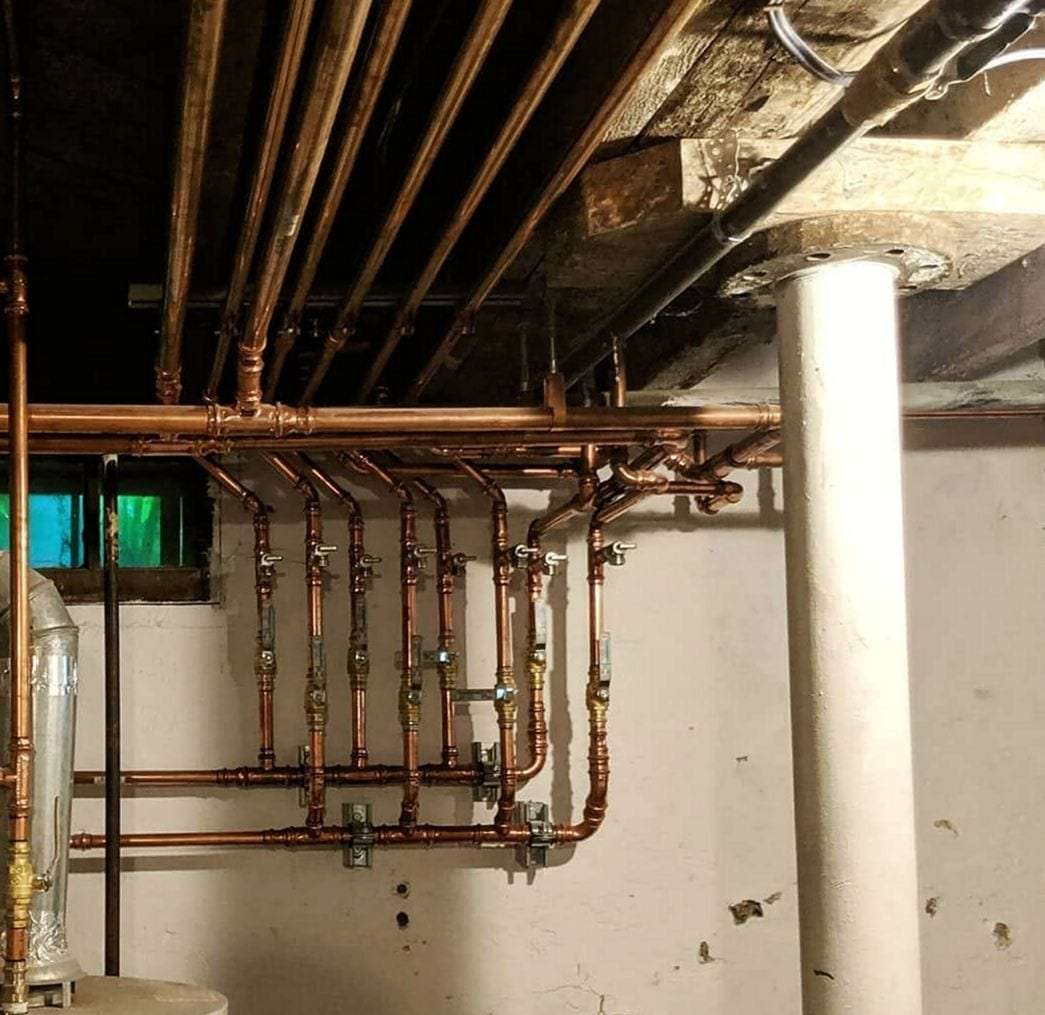
Copper from this period holds up for decades, but not forever. Hard water, fast-moving water in lines that are a little small for the house, and the chemistry of the water itself can thin the pipe wall from the inside until a pinhole opens, often at a bend or beside a fitting. The first sign is rarely a spray. More often it is a brown ring on the ceiling under a bathroom, a soft patch of drywall, green crust on a joint in the basement, or a water bill that jumps for no clear reason.
One pinhole is usually a small job: the water is shut off, the bad section is cut out, a new piece is soldered or pressed in, and the line is turned back on and watched. That kind of leak repair is often the right call, especially when the rest of the pipe looks sound where it can be seen.
Two or three leaks in a few years along the same runs tell a different story. The pipe wall is thin throughout, and the next leak is a matter of time. That is when it makes sense to talk about repiping: replacing the worn runs with new copper or PEX and adding shutoff valves where the house never had them. It is a bigger job, with drywall to open and patch, so it is worth weighing against the damage and disruption of leak after leak. Repiping sits with the other installs and replacements.
Water Heaters in Garages and Basements
In a slab house the water heater usually stands in the garage or a utility closet; in a basement house it sits near the furnace. A garage heater lives with cold winter air and car exhaust, and a gas unit there normally stands on a platform that keeps its burner off the floor. A basement heater has an easier life but does more harm when it leaks, because the water heads for finished rooms and stored boxes. A drain pan with a line to a floor drain is a sensible precaution in either spot.
A house from the 1970s or 1980s is likely on its third or fourth tank by now. The region’s hard water leaves scale in the bottom of the tank, which shows up as popping or rumbling while it heats, hot water that runs out sooner, and in time a leak at the base. A tank that is rusting at the seams or leaking from the tank itself is due for water heater replacement; a failed thermostat, element, gas valve or relief valve can often be repaired instead.
Slab Floors, Basements and Sump Pumps
On a slab, some of the water lines run under or through the concrete. When one of them leaks, the clues are a warm patch on the floor if it is a hot line, the sound of running water with every fixture off, or a water meter that keeps turning. Finding the spot takes patience: shutting off branches one at a time, listening, and watching the meter before anyone breaks concrete. Sometimes the better fix is to leave the old line under the slab and run a new one through the walls or the attic.
Basement houses often have a sump pit with a pump that works hard only a few weeks a year, which is why a failure tends to show up during the first heavy spring rain. A pump that hums but does not empty the pit, a float that catches on the side of the basin, and a check valve that lets the discharge water fall back are the usual faults. Pouring a bucket of water into the pit before the wet season shows whether the pump starts, empties the pit and shuts off, and regular maintenance and inspections catch the slower kinds of wear.
Drain and Sewer Lines Under the Yard
The drains inside most Fairfield houses are plastic, and they clog for ordinary reasons: grease in the kitchen line, hair in the tub, wipes in the toilet. Outside, the sewer lateral to the street depends on when the house was built. Houses from the 1950s and 1960s may have clay tile or bituminous fiber pipe, often called Orangeburg, which softens and flattens with age; later houses usually have PVC with glued joints. When the main line backs up more than once, a camera run through the lateral shows which pipe is down there and whether it is sagging, cracked or crushed, before anyone talks about digging. That is everyday drain and sewer work.
Builder-Grade Fixtures and Valves Due for Replacement
The fixtures that came with a 1970s or 1980s house were built to a budget, and many have now outlived it. Two-handle faucets with worn stems, toilets that run after the flush or need a second one, tub spouts that drip, and older shower valves that let the temperature jump when someone flushes are all common. So are the parts nobody looks at: the multi-turn shutoff valves under sinks and toilets that seize when you finally need them, rubber washing machine hoses gone stiff and cracked, and a tired garbage disposal under the kitchen sink.
Replacing these is planned work rather than an emergency, and it goes further when a few are done at once: quarter-turn shutoffs, braided supply lines, a toilet that clears in one flush with less water, a single-handle faucet. A new shutoff under each fixture also means the next leak can be stopped at the sink instead of at the main. Toilet and faucet work, from a new flapper to a full swap, falls under repairs and replacements alike.
Book a Plumbing Visit in Fairfield
Fairfield addresses are in ZIP code 45014, one of the communities Rossville Plumbing works in from Hamilton. Nixon Bowen gives an estimate only after he has looked at the problem, and he explains what each line covers before any work starts. Describe what is going on in the form below, or call (513) 902-3413.
Thank you. Your request reached us, and we will get back to you by phone or email.
Your request did not go through. Please call us at (513) 902-3413 and we will set it up by phone.
Plumbing trouble at a Fairfield house?