
Water Heater Repair and Replacement in Hamilton
Repair, replacement and installation of gas and electric water heaters in houses, rental units and small shops.
Water heaters rarely quit without warning. Most give signs first: showers that turn lukewarm sooner than they used to, a rumble when the burner lights, a rusty tint in the hot water, a damp ring under the tank. Rossville Plumbing repairs, replaces and installs water heaters in houses, rental units and small shops, and water heater replacements are among the jobs Nixon Bowen knows best.
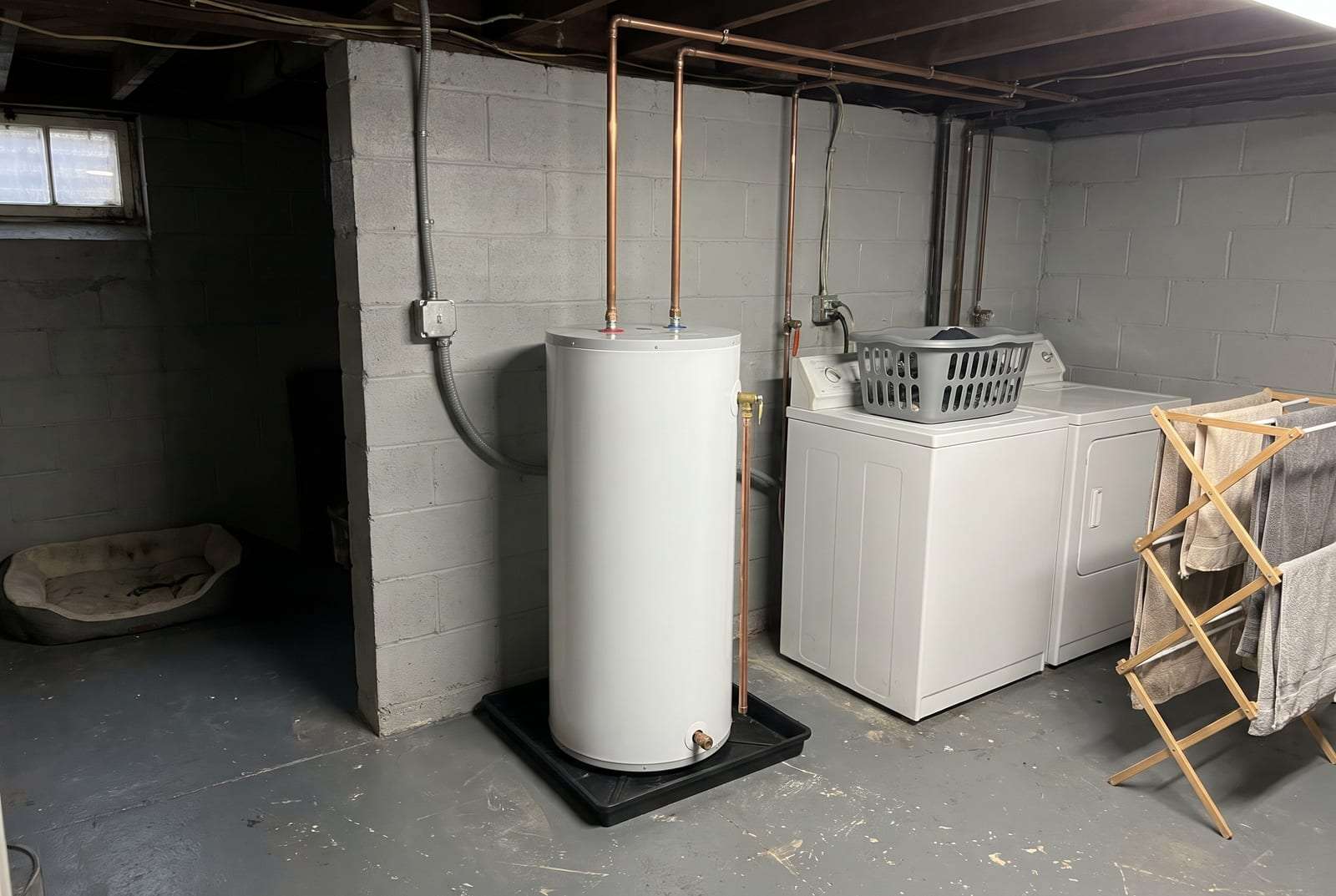
A visit starts with finding the failed part: on gas, the thermocouple or igniter, the gas control valve or the burner; on electric, an element, a thermostat or the high-limit reset. Most are repairs. A leak from the tank itself is not: once the steel rusts through, the heater has to be replaced.
Signs and the Work They Usually Lead To
More columns to the right: swipe.
| Situation | Common signs | Typical work |
|---|---|---|
| No hot water | Pilot out or burner will not light; on electric, a tripped breaker or popped reset button | Thermocouple, igniter or gas valve on gas; element, thermostat or high-limit switch on electric |
| Not enough hot water | Showers run cool partway through; the tank is slow to recover | A lower element or dip tube, a sediment flush, or a larger tank |
| Water leaking from the tank | A puddle under the heater; rust streaks at the base of the jacket | Fittings, the drain valve or the relief valve can be repaired; a leaking tank body means replacement |
| Rumbling or popping noises | Crackling or knocking while the burner or elements run | Flushing sediment from the bottom of the tank; cleaning or replacing scaled elements |
| Rusty hot water | Brown or orange tint from hot taps only | A new anode rod, or replacement if the tank lining is rusting |
| Old unit due for replacement | An old date on the rating plate, more frequent repairs, corroded fittings | A new heater sized for the household, with new connectors and relief valve discharge pipe |
| Switching between tank and tankless | Wanting floor space or steady hot water, or a tankless unit that cannot keep up | Sizing the unit and checking the gas line, venting and electrical supply before repiping |
Not sure whether yours is worth fixing? The repair-or-replace helper on the Installs & Replacements page weighs the age of the unit against what has gone wrong.
What a Replacement Involves
The old heater comes out first: gas or power off, cold supply closed, tank drained. The new one goes on the same spot with new connectors, a new temperature and pressure relief valve and its discharge pipe; on a gas unit, the connection is leak-tested and the flue checked for draft. Nixon puts drop cloths down first and sweeps and wipes the work area when he finishes.
What to Note Before You Call
The rating plate on the side of the tank answers most of the first three.
- Fuel type. A gas heater has a flue pipe on top; an electric one has a cable into the top and two small side panels.
- Tank size, if you know it, in gallons.
- Age of the unit. If no date is shown, the serial number often starts with the year and month it was made.
- Where it sits: basement, garage, closet or attic, and how easy it is to reach.
- Symptoms: what you notice, when it started, and any water, noise or smell.
Hard Water and Basement Heaters in Hamilton
The groundwater around Hamilton is hard. Minerals settle as scale and sediment on the bottom of the tank, where they insulate the water from the burner, cause the rumbling and shorten the tank’s life; electric elements crust over the same way, and regular flushing slows the buildup. In the older houses of Rossville and the East End, the heater usually sits in the basement near the floor drain, which keeps a swap simple, though an old tank there can weep for months unnoticed. In newer houses on the edges of town it is more often in a garage, where a gas heater has to stand raised off the floor.
Repair or Replace, Tank or Tankless
Is it worth repairing an older water heater?
It depends on what failed. A thermocouple, igniter, element or thermostat can be replaced on an older heater; a leaking tank cannot be repaired. When a heater late in its life needs a major part such as the gas control valve, replacing the unit usually makes more sense.
How do I tell whether a leak means the tank is finished?
Dry the floor and find where the water starts. A drip from a valve or the fittings on top can usually be fixed; water seeping from under the jacket means the tank has rusted through.
Is a tankless water heater better than a tank?
Each has trade-offs. A tankless unit heats water as it flows, takes little room and has no tank to rust through, but it needs a gas line and venting sized for it, or a heavy electrical supply, and hard water means regular descaling. A tank goes back in with simple connections and handles several showers at once when sized right. Switching usually means a larger gas line and new venting.
No hot water, or a tank that has started to weep?